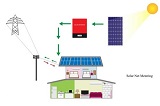
An Off-Grid solar system (or stand-alone) is a type of solar photovoltaic system that operates autonomously, generates power, and supplies it to electrical loads independently of the local utility company. If you own a cottage or live in a remote area in Ontario with no electric poles around, installing an Off-Grid system might be the only way to bring power to your place.
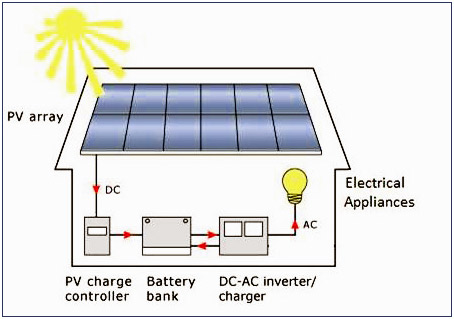
Typical Off Grid Solar System Components
A stand-alone solar panel system usually consists of the following main components:
- Solar panels array (strings of solar modules connected in series and/or in parallel)
- PV charge controller (a device that regulates battery bank charge by controlling the charging voltage and/or current)
- Battery bank (a set of batteries connected to each other to provide required voltage and capacity)
- Inverter (a device that converts DC power coming from the solar array to AC power used in-house)
- Loads (a piece(s) of equipment that consumes electricity)
With Ontario’s cold winters and hot summers, you need to be extra careful when designing off-grid system components. Ambient temperatures can significantly affect the output voltage of solar panels. In cold weather, for example, the voltage will be higher than the panels rating, while on hot summer days it will definitely drop.
These extreme conditions affect the other elements of the stand-alone solar PV systems as well, such as charge controllers and batteries.
How to size batteries for an off-grid solar system
Batteries are rated based on voltage and current values. The capacity of a battery is a measure of the available charge in ampere-hours (Ah). Capacity is affected by temperature, discharge current and battery age. The capacity maybe expressed as a function of the rate of discharge. The rate and depth of discharge of a battery directly affect its life span.
The physical structure of the battery and the amount of electrolyte inside are directly related to the capacity of the battery. For instance, a battery with a large plate area and active material provide batteries with a larger capacity to store energy.
The total amount of current used by a smaller load will also be more than the amount of current used by a large load. This may be attributed to loss of power in the form of heat that is created in a high load situation. A small load situation may allow the batteries chemical process to equalize more efficiently than a large load situation.
How to choose a solar charge controller
Most of the charge controllers have got the maximum voltage specified, and many PV system designers in Ontario will try to get to it as close as possible (in order to avoid extra wiring needed to combine multiple strings). When designing an off-grid solar PV system you MUST consider extreme cold temperatures and compounded effect of low voltage rise. Otherwise going above the PV charge controller rating may void the manufacturer’s warranty.
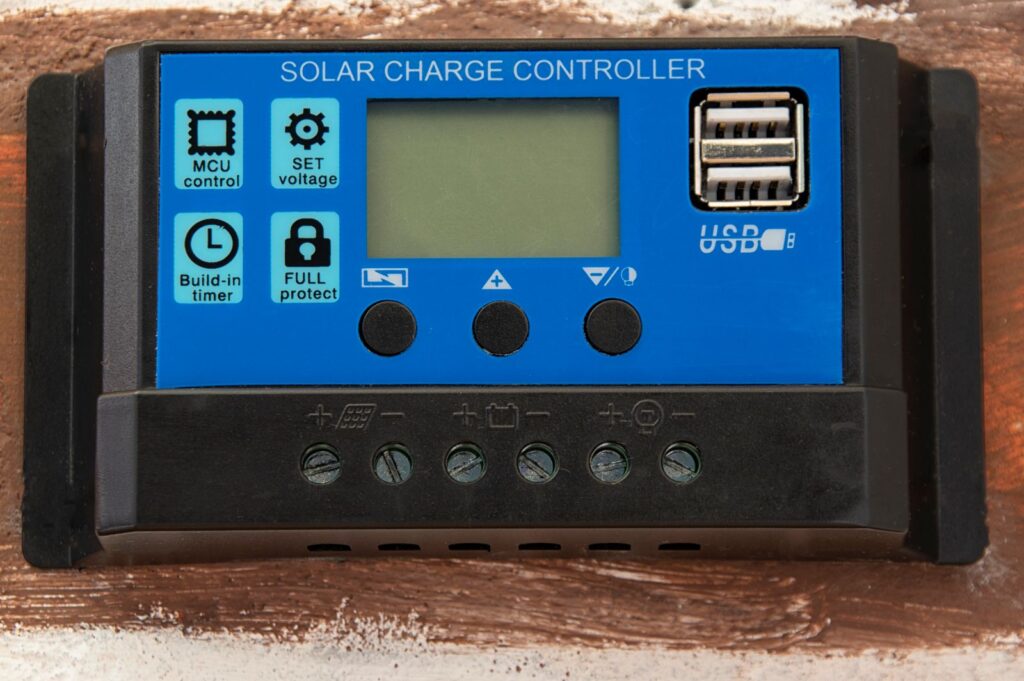
On the other hand, on a very hot summer day your PV charge controller may not be able to come out of the “dormant mode” due to lower voltages. This happens because most MPPT controllers require 130 percent of the target battery charge voltage in order to kick-start.
When it comes to storage batteries, you’d ideally place them in a temperature-controlled storage room with good ventilation. Most typical led acid battery chemistries would require a higher voltage during a winter charging cycle, while some of the lithium batteries manufactures do not recommend exposing their products to freezing temperatures at all.
Click here to get you connected to your local solar panels installer, and get multiple quotes for FREE within 24 hours!